The Wright Brothers:
The Invention of Flight
Watch the Feature
The Genesis
“Everyone else was chasing lift and horsepower. The Wrights asked the question no one could answer: once you are in the air, how do you stay in control?”
They had no university degrees, no government laboratory, and no team of professional scientists — only a bicycle shop in Dayton, Ohio, a hand-built engine, and a problem that had defeated generations of inventors. While rivals poured money into ever more powerful engines, Wilbur and Orville Wright became convinced that the real obstacle to flight was not power but control. A pilot, they reasoned, had to be able to balance and steer a machine in three dimensions, the way a cyclist balances a bicycle.
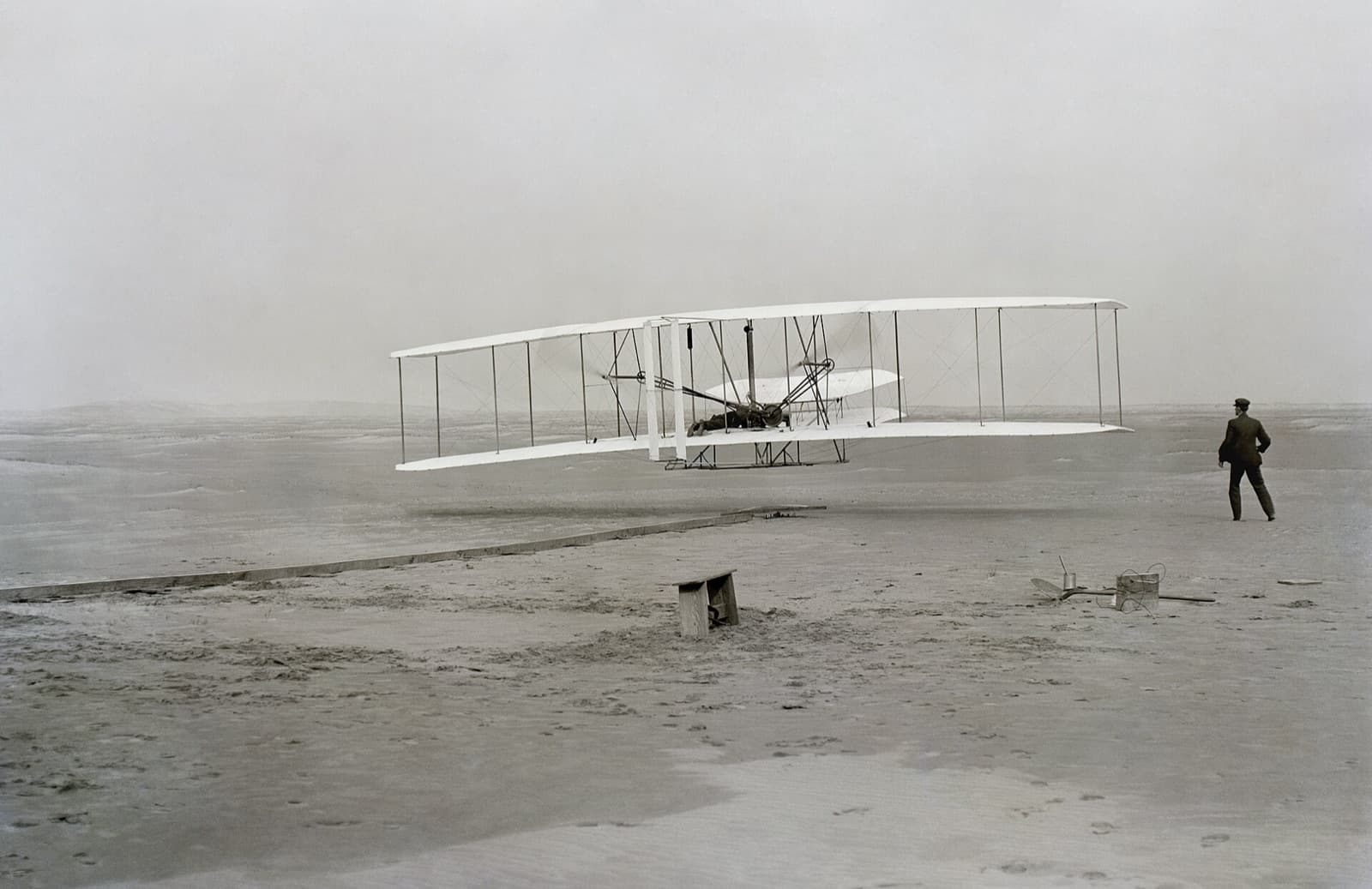
So they built their own wind tunnel, corrected the flawed data the field had relied on, and tested glider after glider on the windswept dunes of Kitty Hawk. On December 17, 1903, that patient engineering paid off: the Wright Flyer became the first powered, heavier-than-air machine to achieve controlled flight — twelve seconds that ended millennia of earthbound history. Within a generation their invention would cross the Atlantic, transform in war, carry passengers across the world, and, a century later, send a fragment of the original Flyer to the surface of Mars.
Historical Milestones
The Glider Years
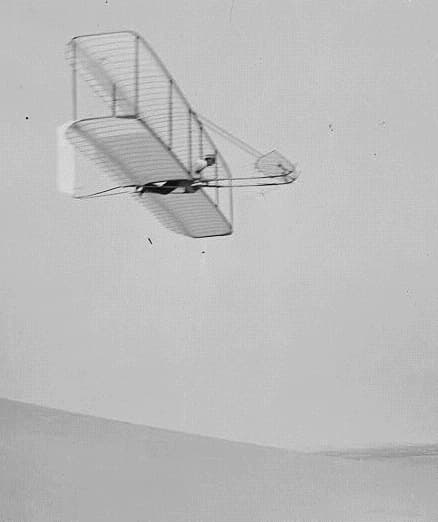
After a homemade wind tunnel rewrote the science of lift, the brothers made hundreds of glides at Kitty Hawk — perfecting the three-axis control system, wing-warping, and rudder that would make true flight possible.
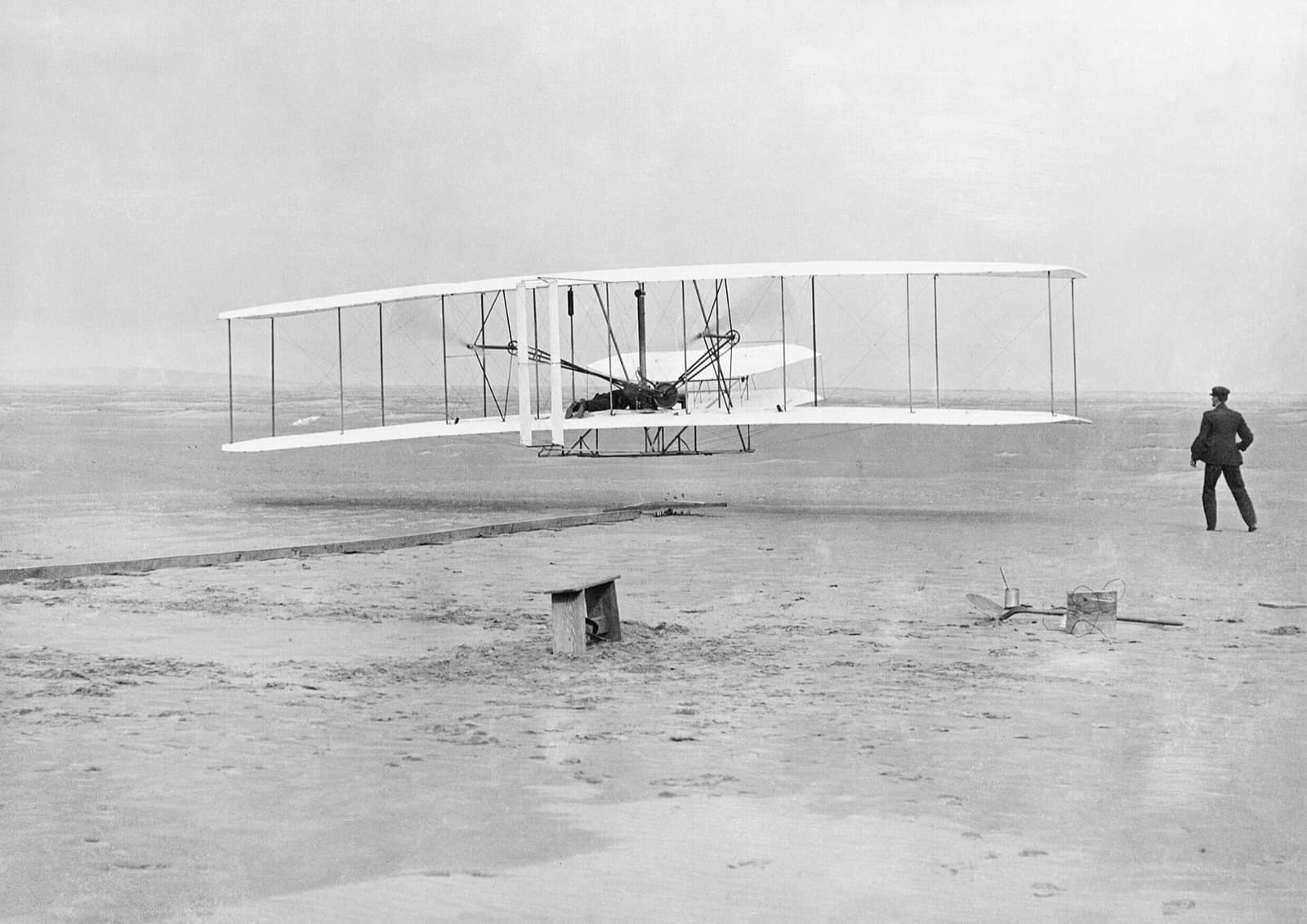
Twelve Seconds at Kitty Hawk
On December 17, with Orville at the controls and Wilbur running alongside, the Flyer rose from its rail and travelled 120 feet in twelve seconds — the first powered, controlled, sustained flight of a heavier-than-air machine.
Proving It to the World
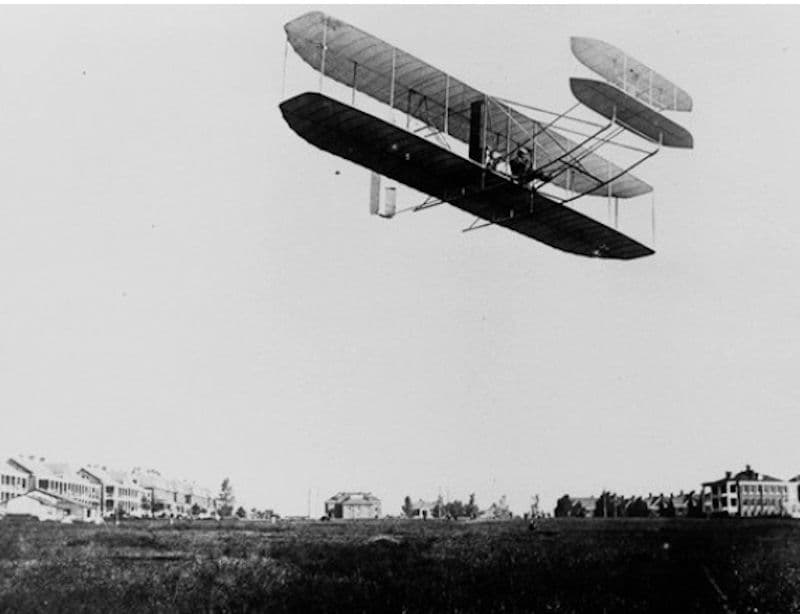
Public demonstrations in France and military trials at Fort Myer silenced the doubters. The aerial age had begun — and the airplane would soon reshape travel, warfare, and humanity's sense of what was possible.
The Pioneers
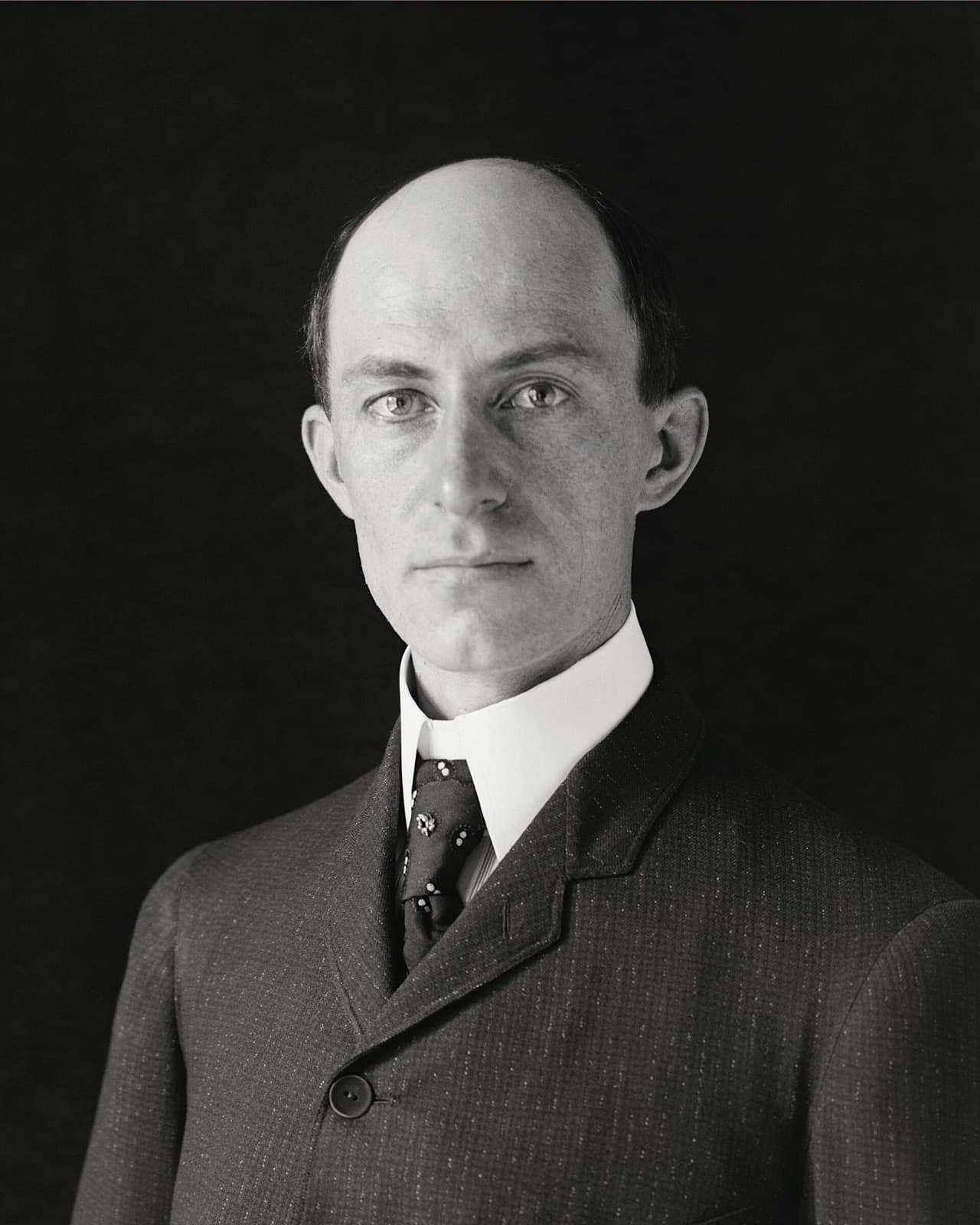
Wilbur Wright
The Strategist
The elder brother and driving intellect, who framed flight as a problem of control and led the theoretical work — then carried the Flyer to Europe and made the world believe.
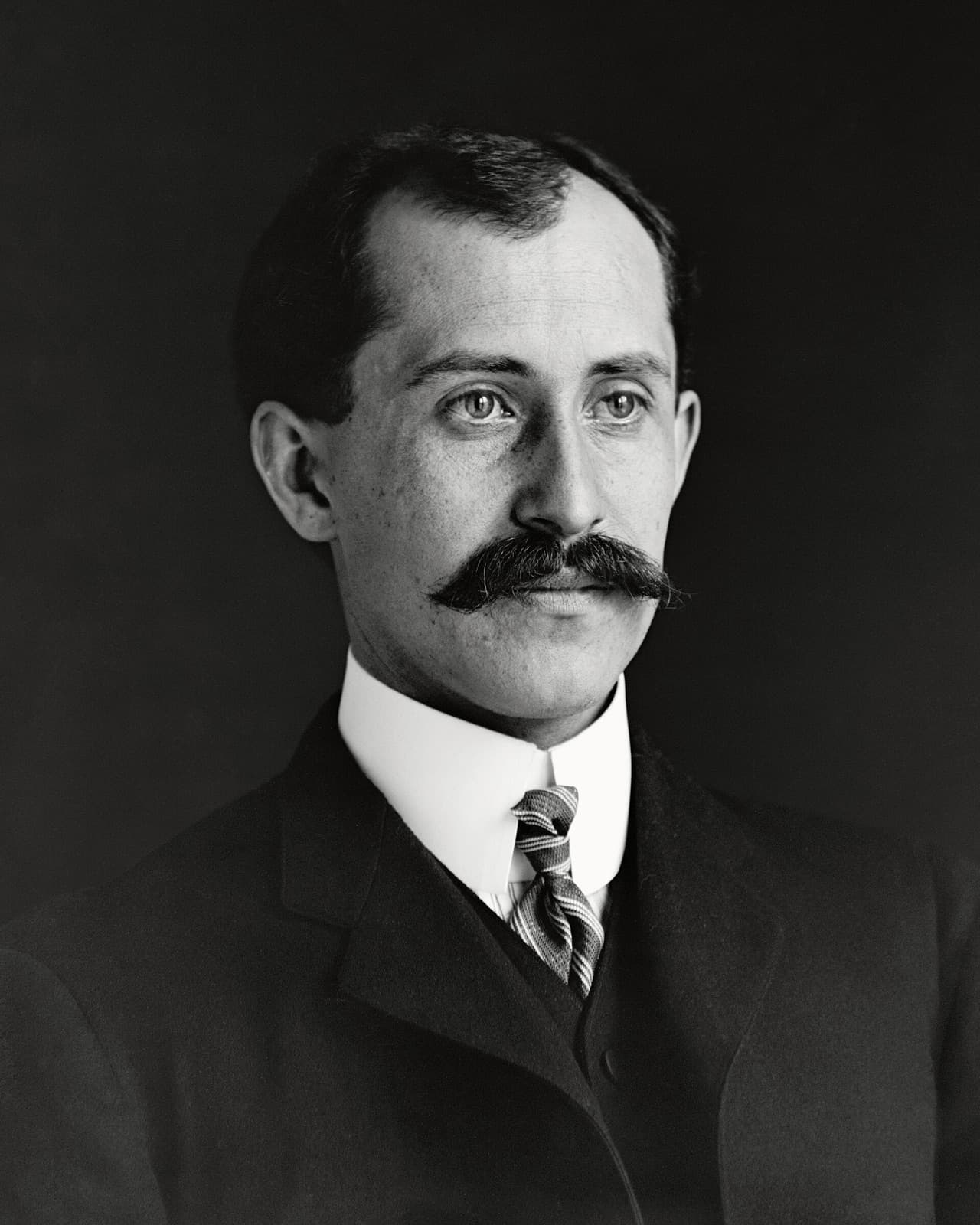
Orville Wright
The Builder
The hands-on engineer and mechanic who piloted the first flight at Kitty Hawk, and who lived long enough to see aircraft break the sound barrier.
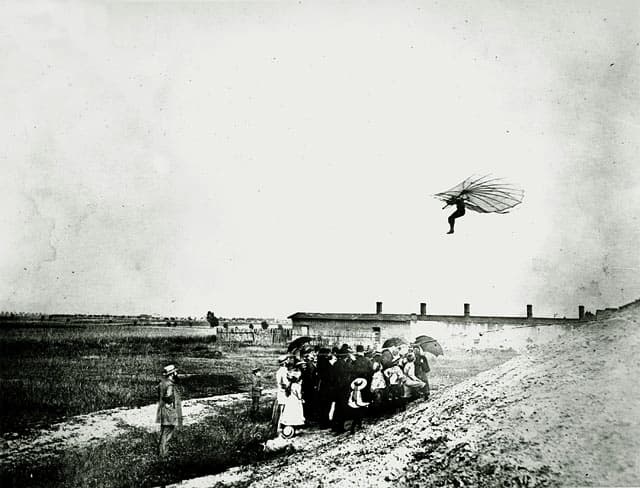
Otto Lilienthal
The Glider Pioneer
The German “flying man” whose gliding experiments — and fatal 1896 crash — inspired the Wrights and proved that mastering control, not just lift, was the key to flight.